
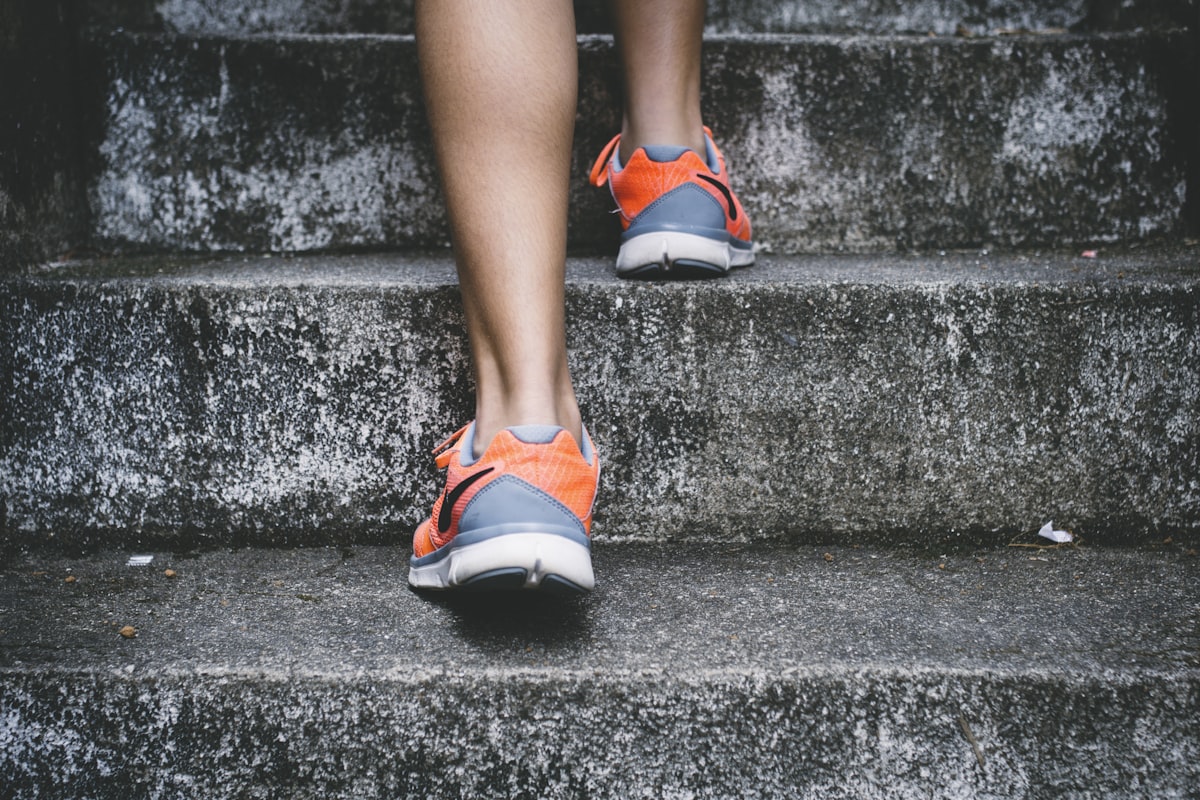
I walk 15,000–20,000 steps a day. Not because I’m disciplined — because I genuinely enjoy moving. So when I first heard about the Japanese walking method, I was skeptical. I didn’t think a specific technique for walking could make that much of a difference.
I was wrong.
What is it, actually?
The Japanese walking method — officially called interval walking training (IWT) — was developed by researchers at Shinshu University in Japan. The protocol is dead simple: alternate between 3 minutes of slow walking and 3 minutes of brisk walking, repeated 5 times. That’s 30 minutes total.
What makes it interesting is the research behind it. In a 5-month study, the interval group showed significantly greater improvements in aerobic fitness and blood pressure than a group walking at a steady, moderate pace — even though both groups spent the same amount of time walking.
The mechanism: brief high-intensity bursts stress your cardiovascular system just enough to force adaptation. The recovery phases let your body absorb those improvements without burning out.
Why it’s gone viral in 2026
Search interest for “Japanese walking method” is up nearly 3,000% year over year. Part of that is the longevity conversation — people like Peter Attia and Andrew Huberman have made cardiovascular health mainstream in a way it wasn’t five years ago. People are realizing that how you move matters as much as how much you move.
The other part: it’s genuinely accessible. No gym, no equipment, no fitness level required. You just walk — but smarter.
The exact protocol
Easy pace. You could sing if you wanted to. Heart rate: 50–60% max.
Faster than comfortable. Talking is possible but slightly difficult. Heart rate: 70–80% max.
Do this 4+ days per week. The research used this exact frequency.
How to do it without going outside
Outside is fine, but it has obvious limitations — weather, time of day, finding a route that works. A walking pad solves all of that. You set the speed to 2–3 km/h for slow intervals, bump it to 5–6 km/h for brisk, and let a timer handle the switching.
The benefit: you can do this at 7am before your day starts, during a lunch break, or at 10pm when it’s dark outside. Location and weather become irrelevant.
Walking pad I’d use for this
The UREVO Strol 2E covers the full speed range you need — slow enough for recovery intervals, fast enough for the brisk phase. Quiet, foldable, under $300.
👉 Check Current Price on AmazonPractical tips
- Start with 3 rounds (18 minutes) if 5 feels like too much the first week
- Use a phone timer — set it to repeat every 3 minutes so you don’t have to think
- Morning works best for most people — it sets your energy and gets it done before the day takes over
- Consistency beats intensity — 4 mediocre sessions is better than 1 perfect one
If you’re already walking regularly and want to get more out of the same time investment — this is the upgrade.